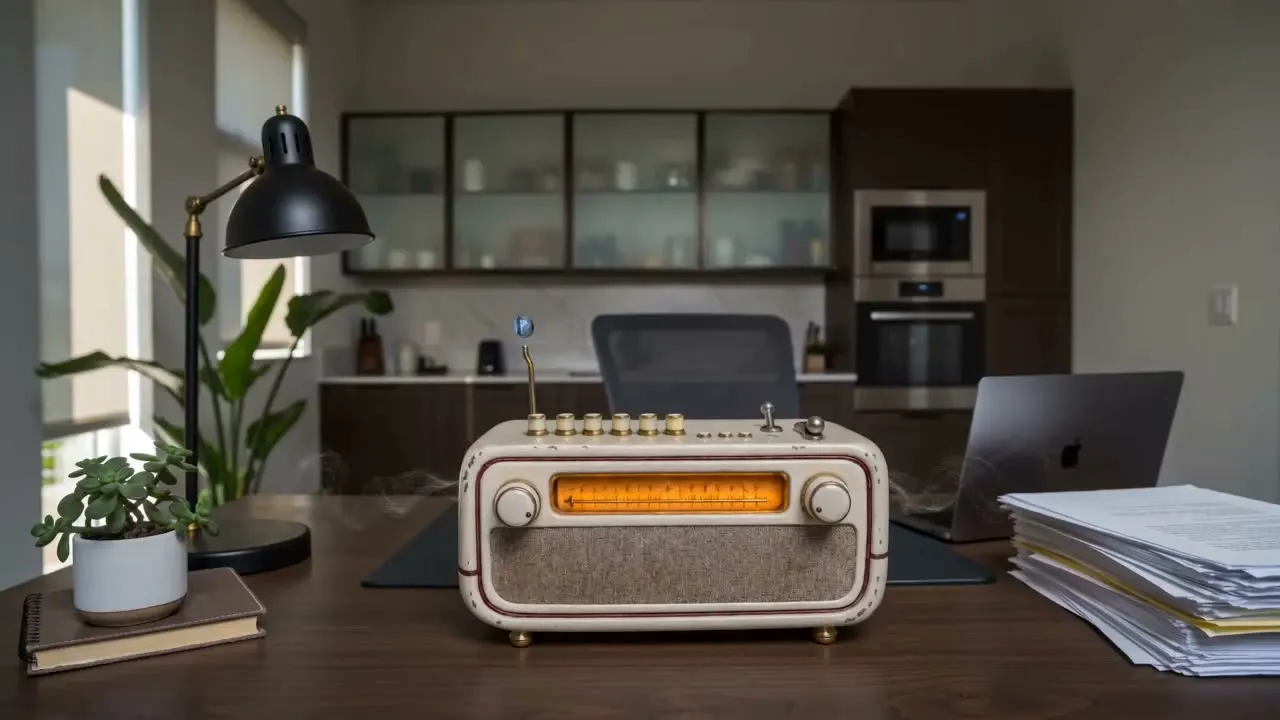
plays forever.
never repeats.
download the engine
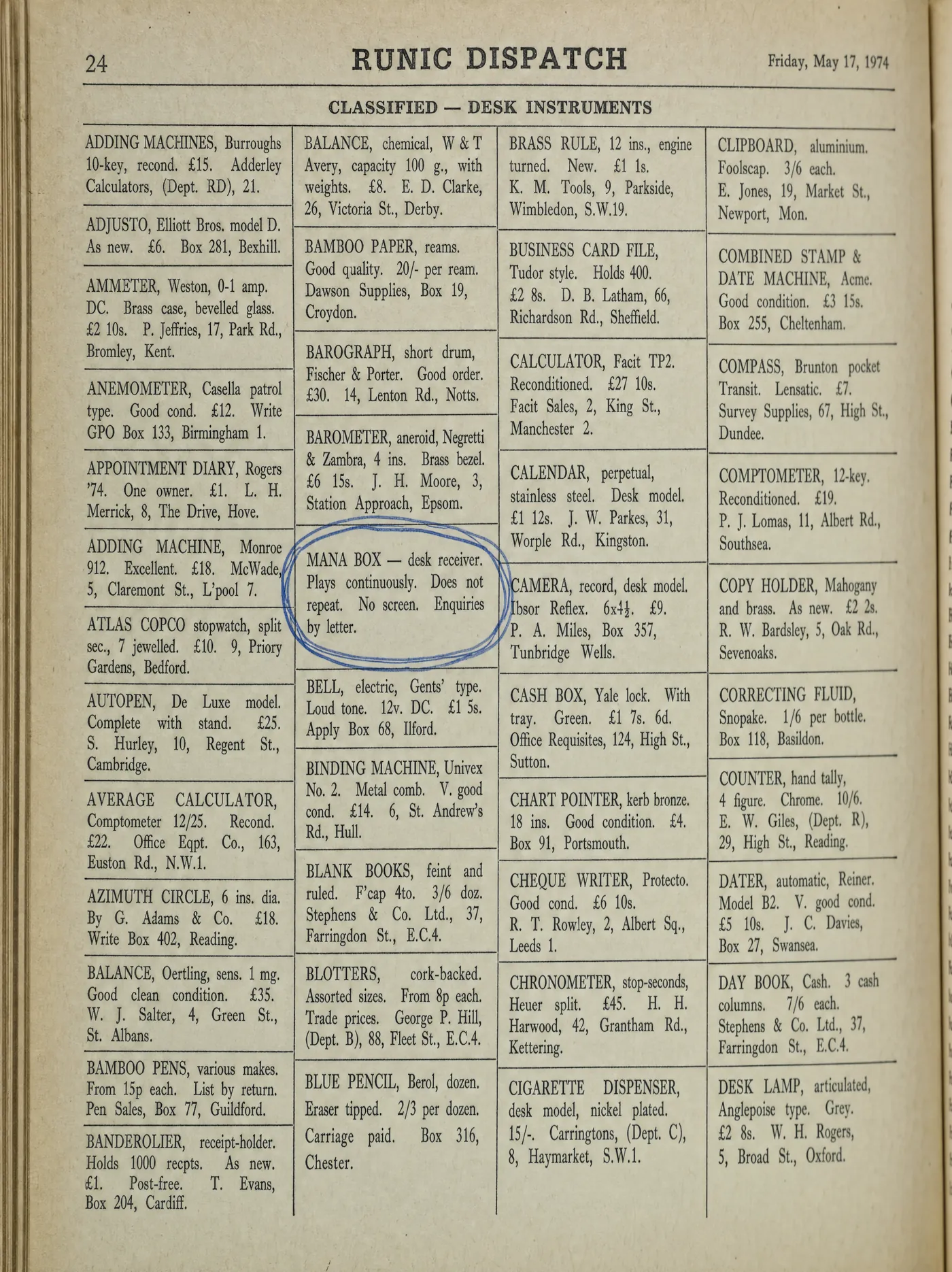
an invented desk receiver, running a real supercollider patch that generates endless ambient music and never plays the same thing twice.
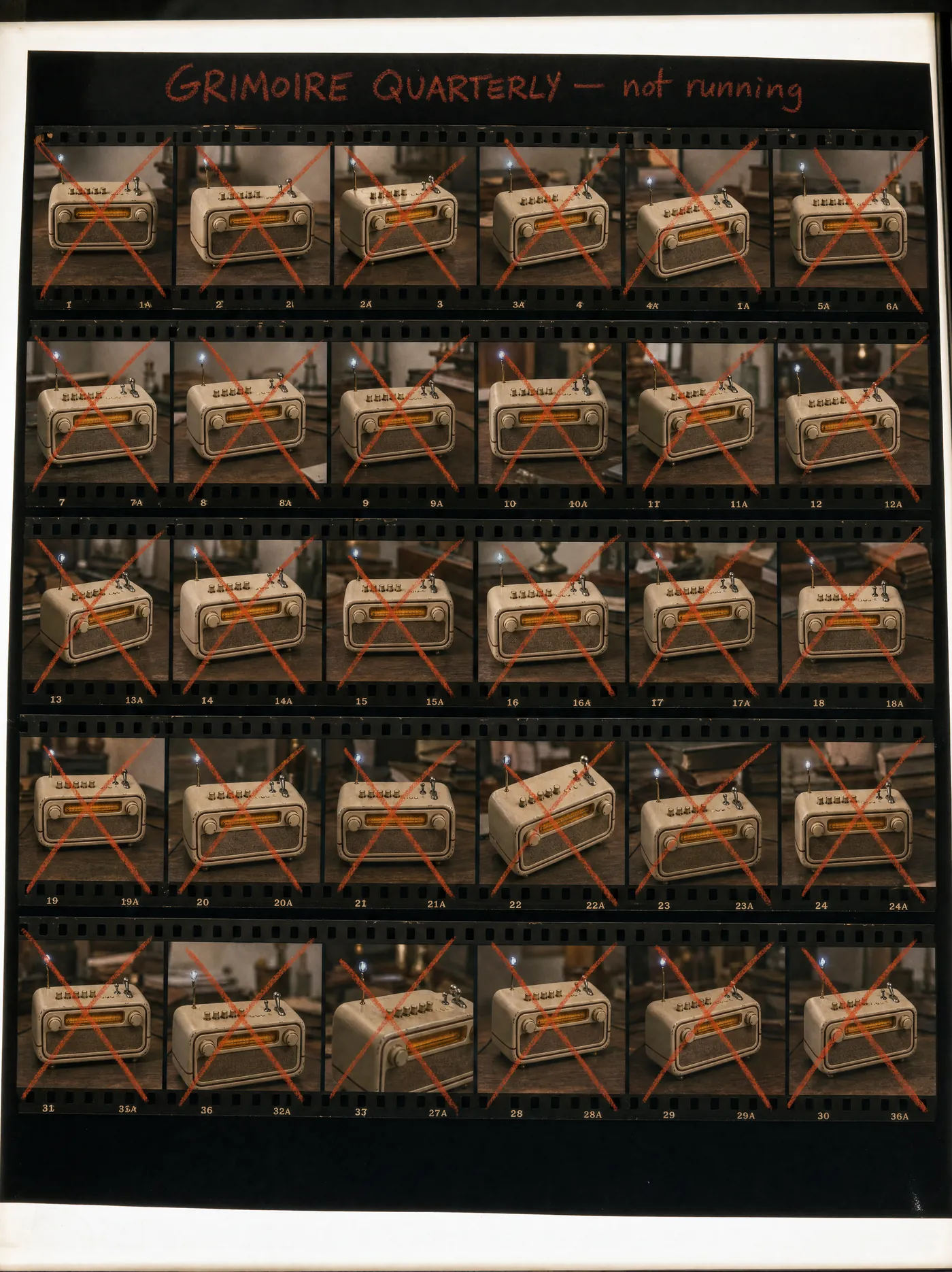
plays forever. never repeats. the engine is real. the box is not. no screen. supercollider, one folder.
it has been playing the whole time.
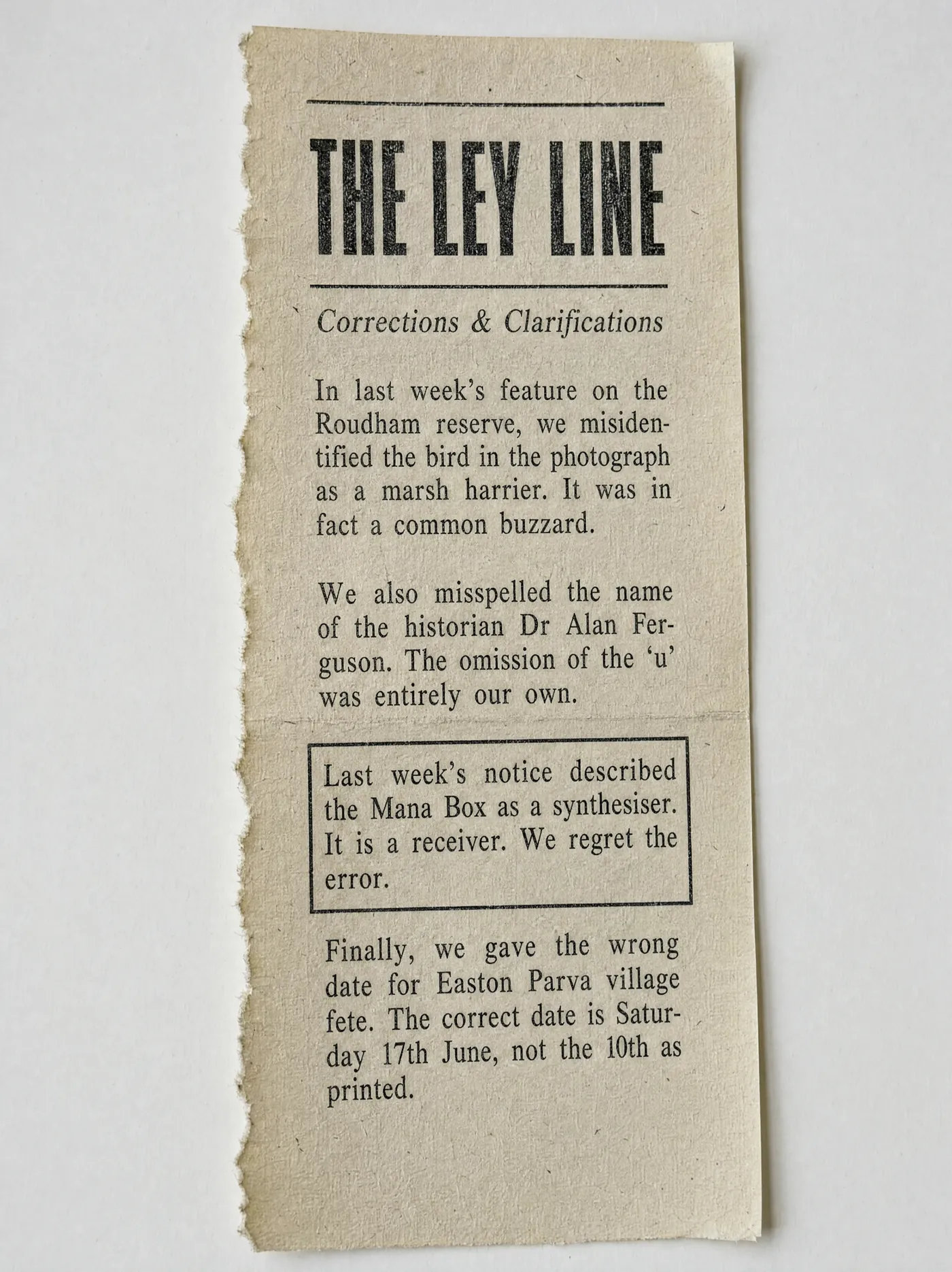
mana box isn’t a synthesiser.
it’s a receiver.
the receiver is invented. the patch underneath it is real: supercollider, one folder, free, and already running.
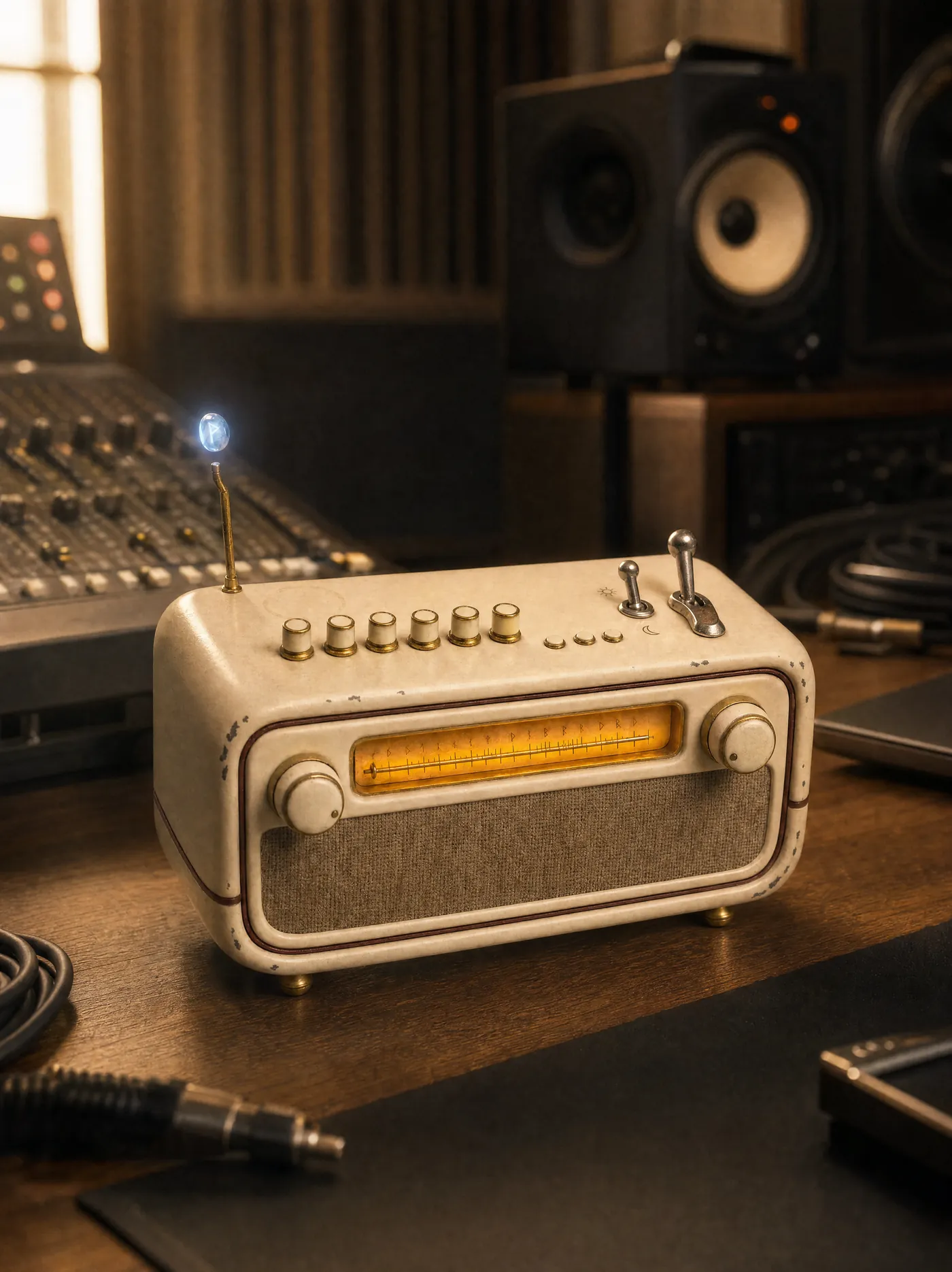
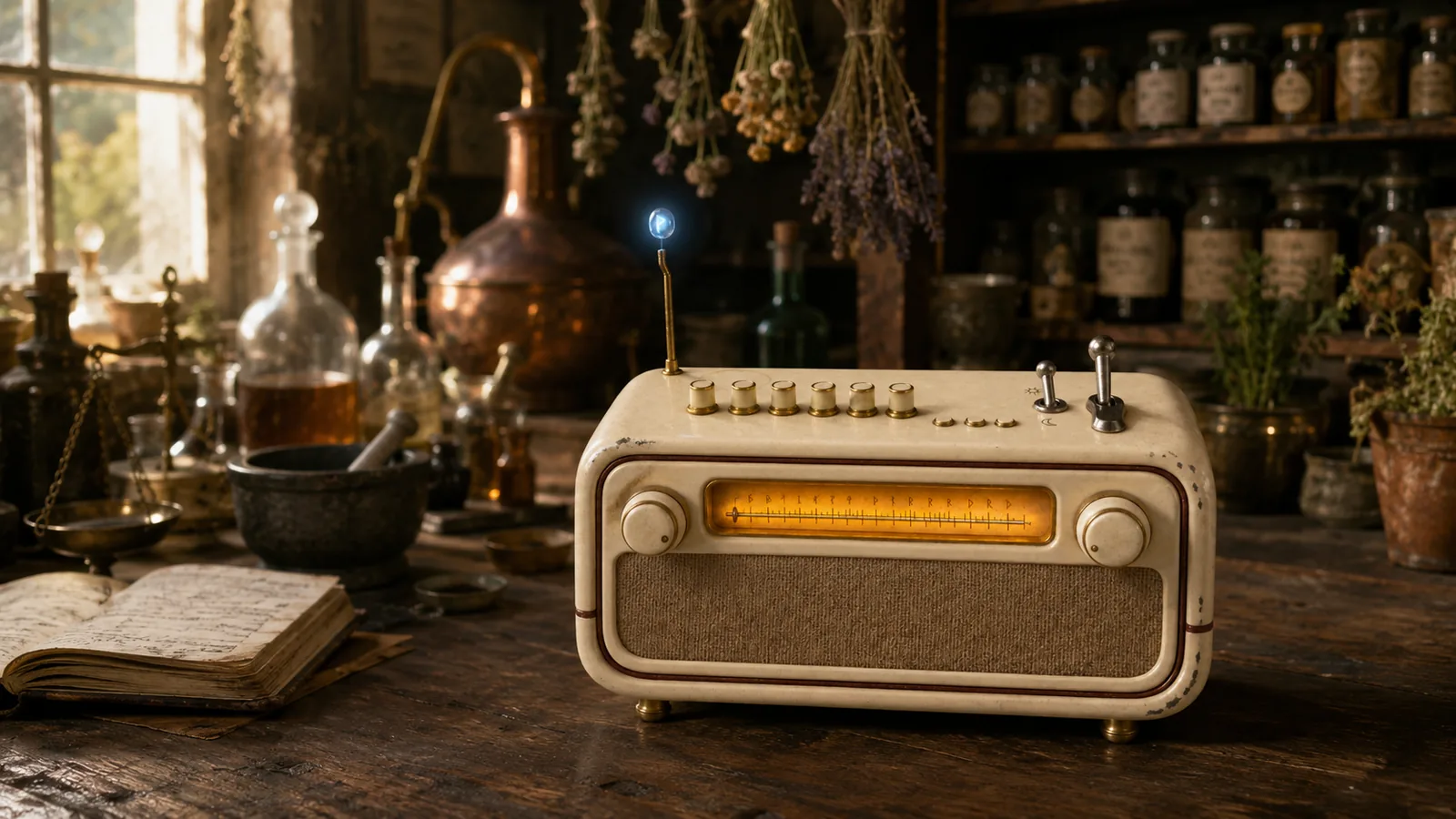
the same box.a different sort of room.
seven parts.
six of them are fake.
the stone, the antenna, the deck, the glass, the grille and the case were invented for the photographs. the seventh is a supercollider patch, and it will run on a laptop, a raspberry pi, or anything else you can conjure a speaker onto.

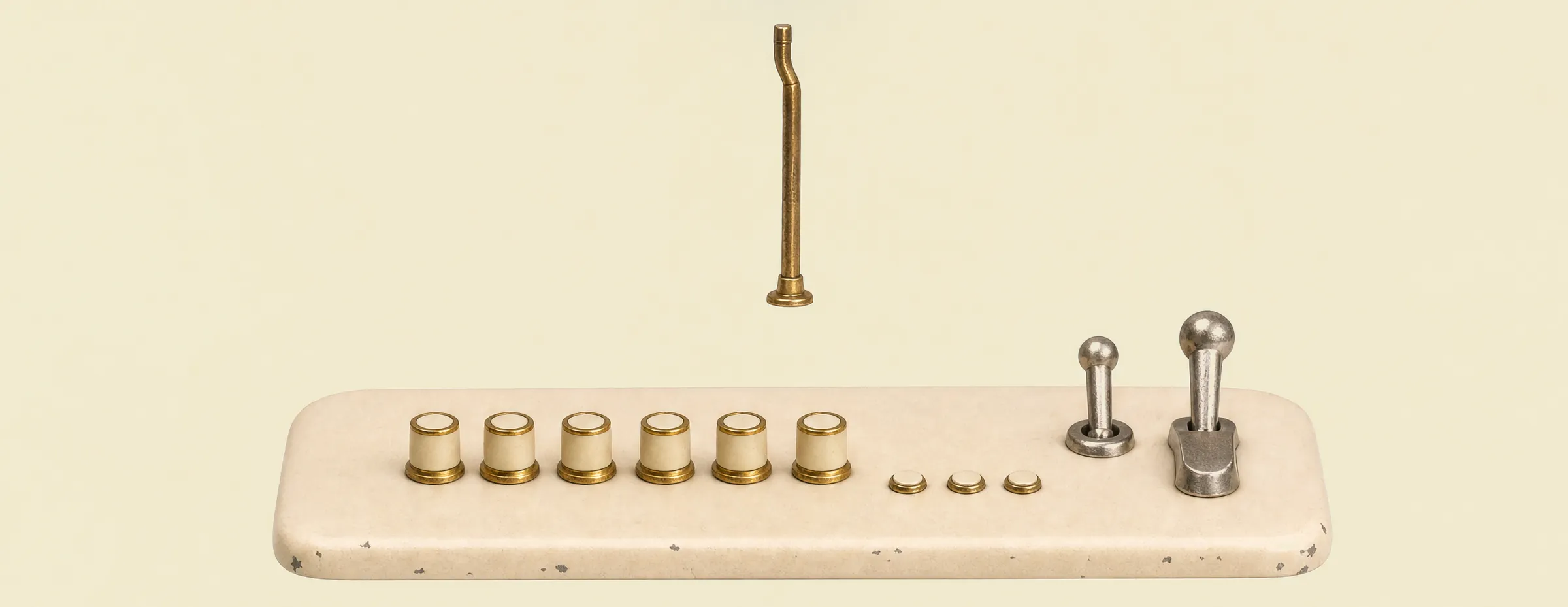


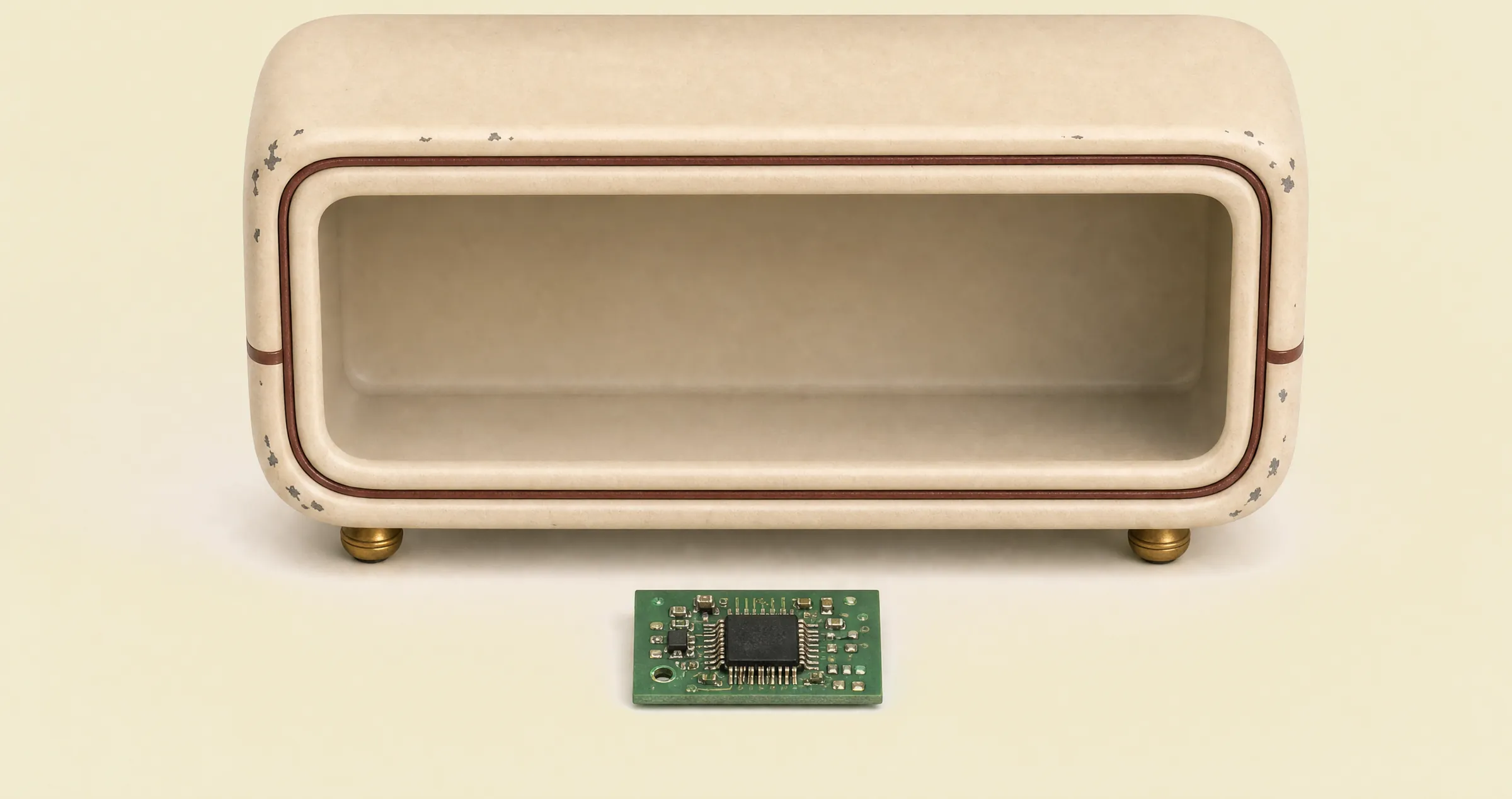
The Mana Box taken apart into seven pieces, laid out in one vertical stack on a plain field: the floating rune stone, the bent brass antenna, the top deck plate with its knobs, buttons and switches, the amber dial window, the oatmeal linen grille, the empty cream shell with its oxblood trim and brass feet, and a small green circuit board.
- the floating stone receives. it never touches the antenna.
- the antenna brass. bent by hand.
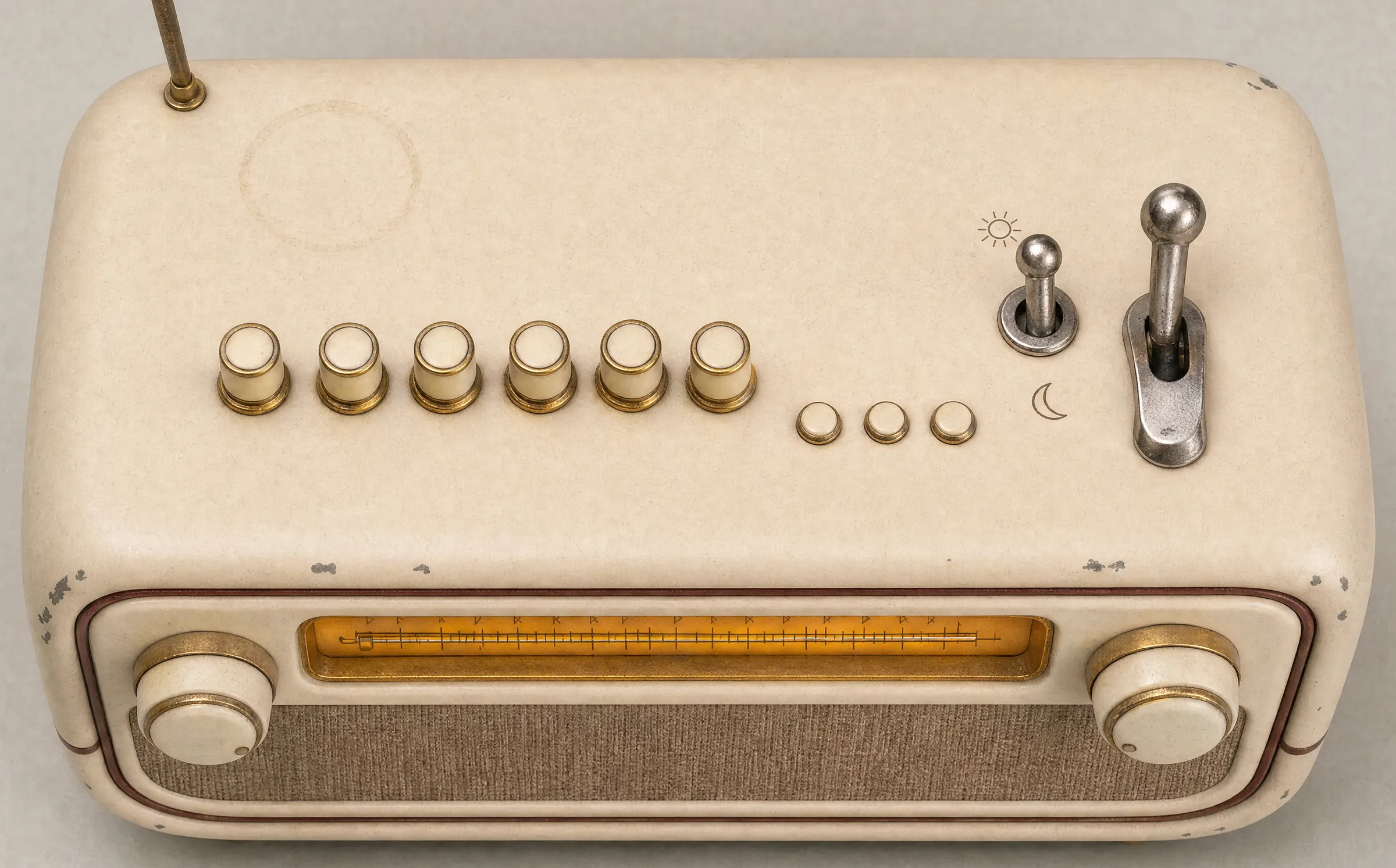
- the top deck eight knobs. three buttons. two switches. no screen.
- the dial glass amber by day, blue by night. lit glass, not a screen.
- the grille oatmeal linen over the speaker.
- the case cream enamel. it chips.
- the circuit board a supercollider patch. the only real part, and the entire product.
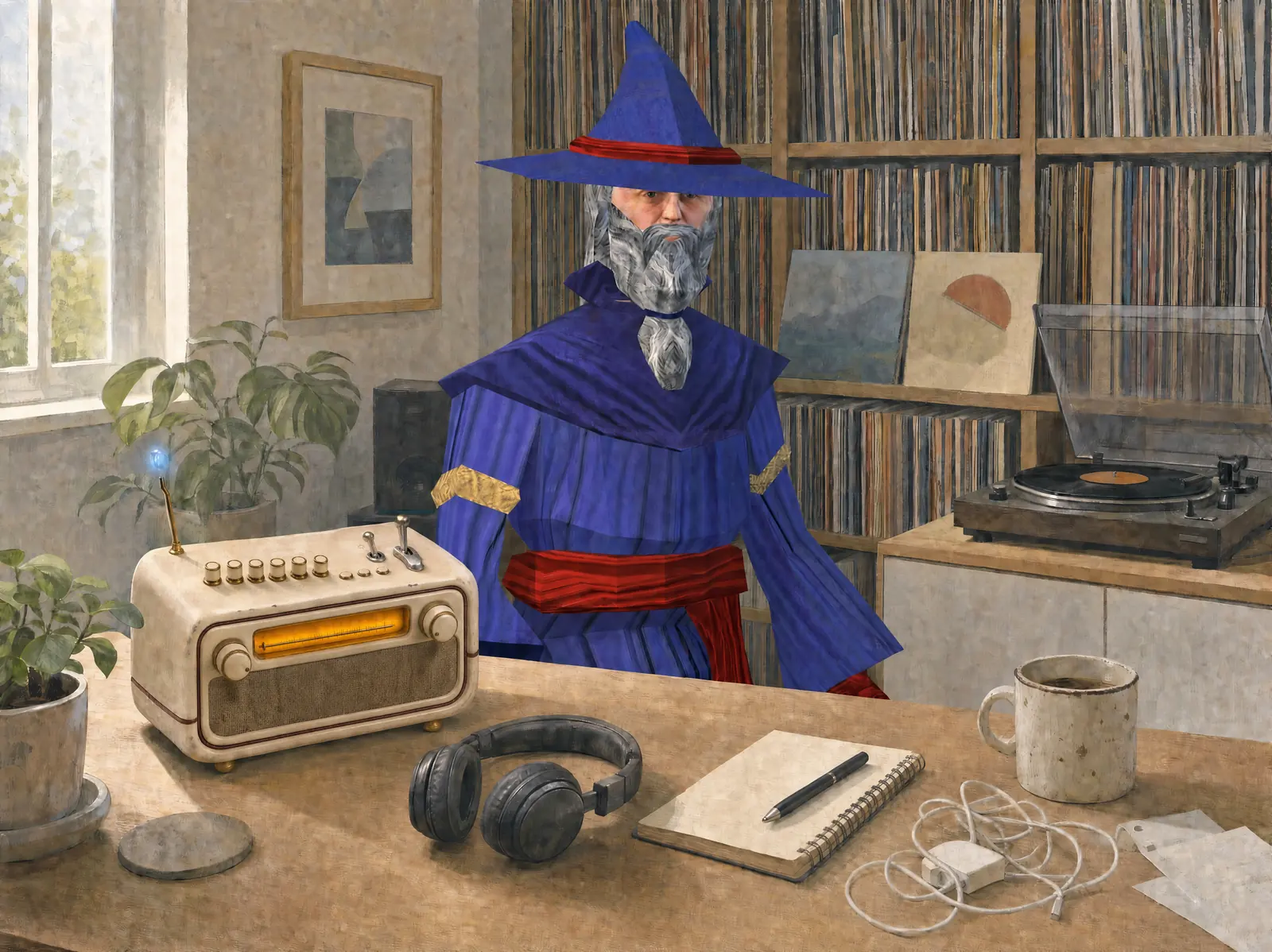
day warm, dusty, jazz-tinged ambient. the dial glows amber, and the right front knob means evolve.
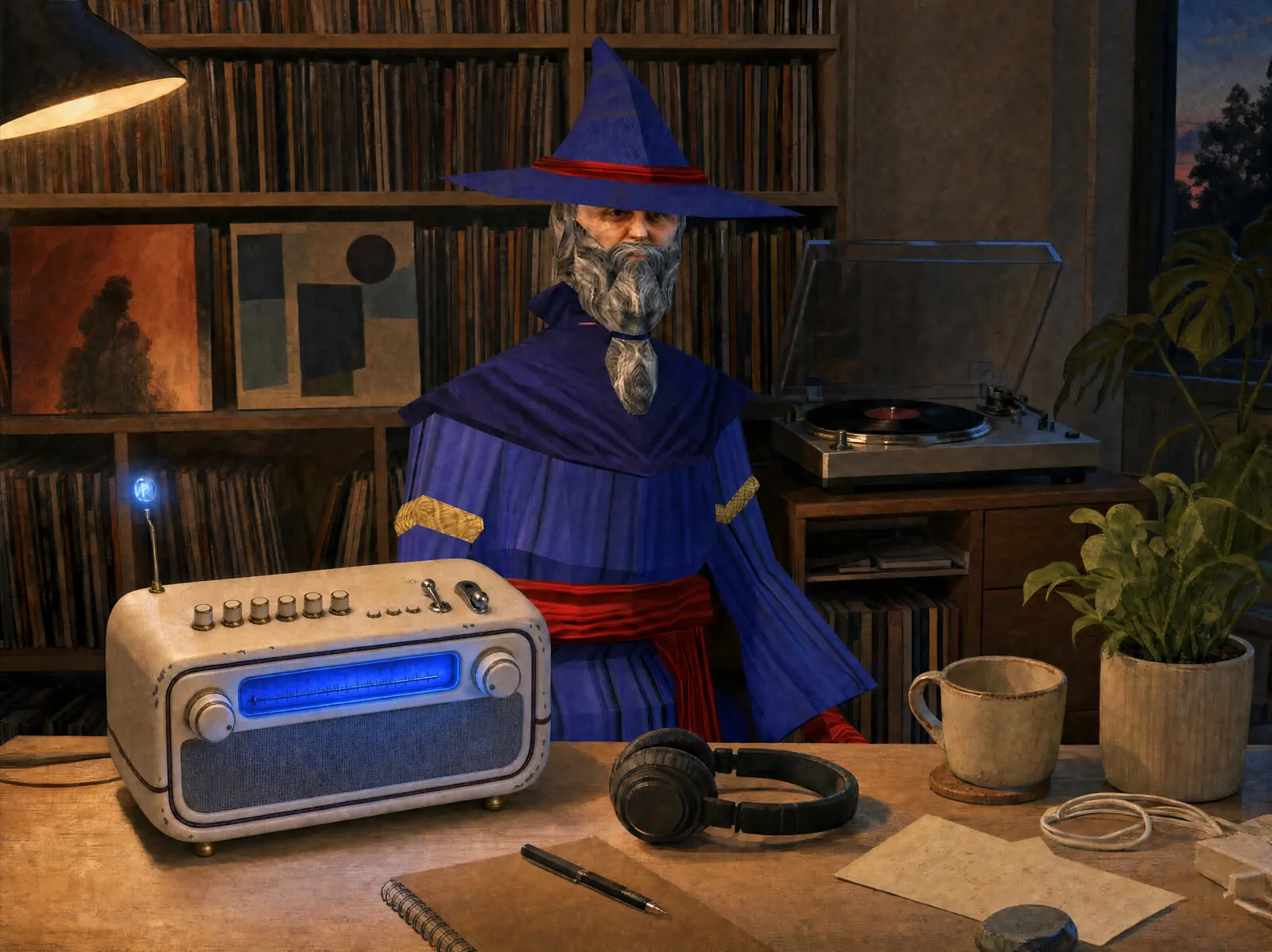
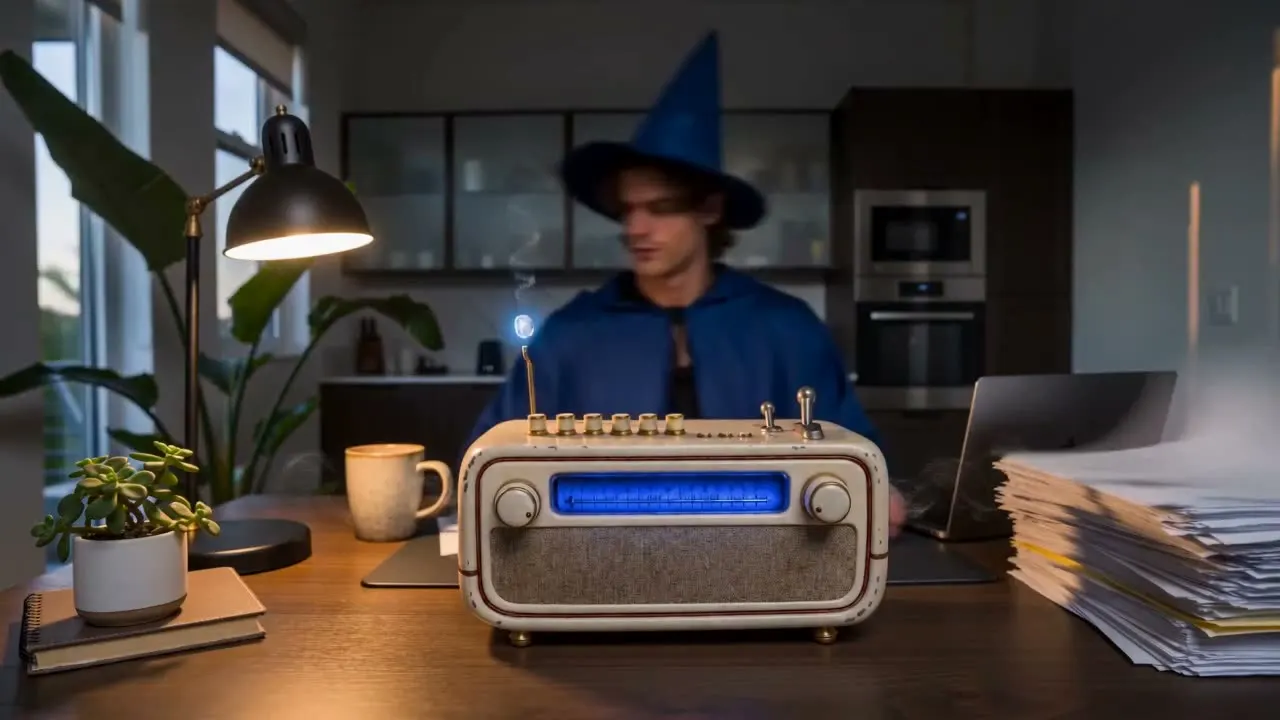
night a grid of arpeggios and low bass. the dial glows blue, and the same knob means rate.
flip the switch.
the room changes.
day is for working through. night is for coming back from.
what the ownerssay about it.
-
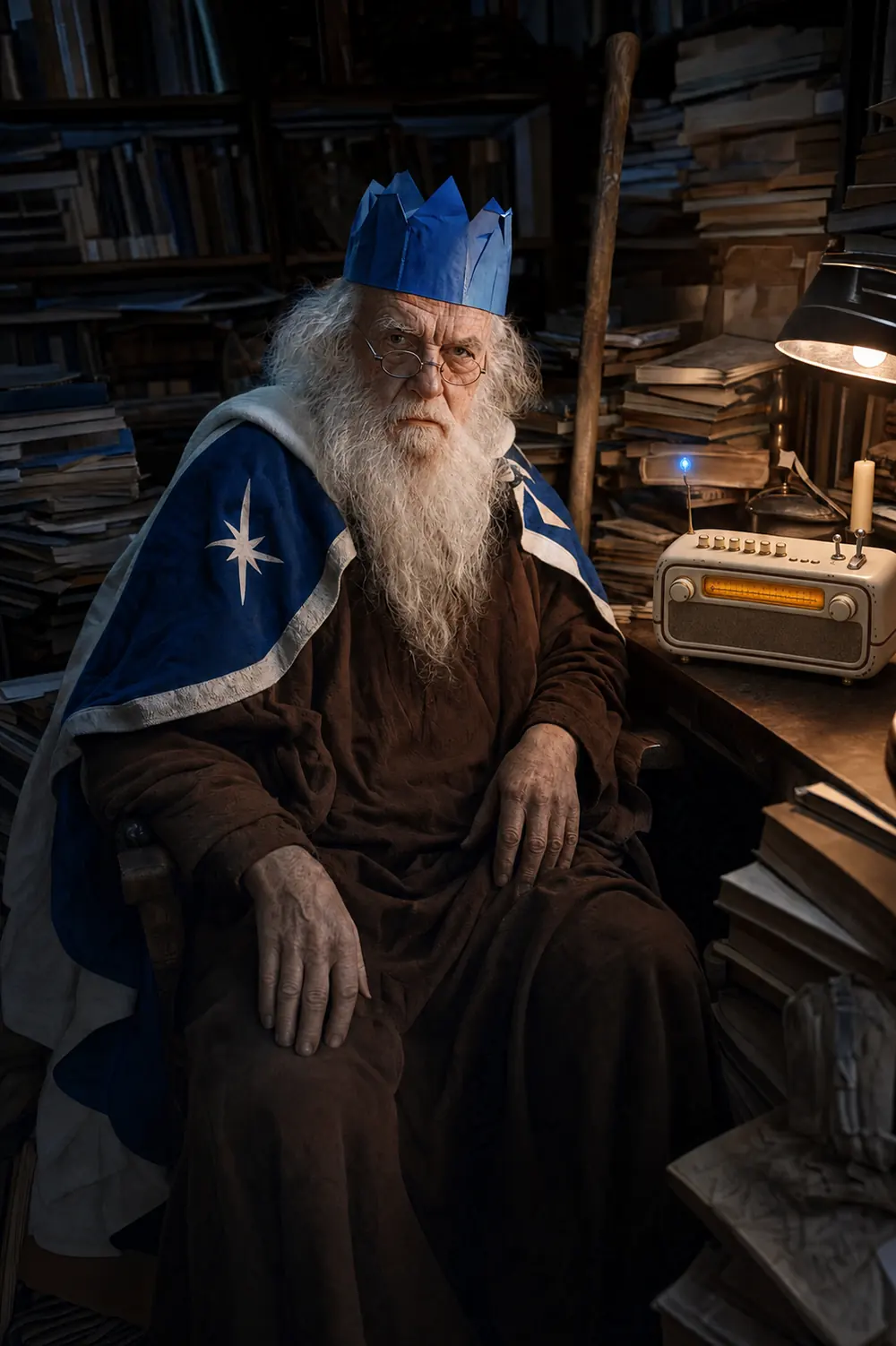
rated 5 out of 5
“i keep it on past midnight. the room stops being empty.”
declined to give his name
night study · verified owner
-
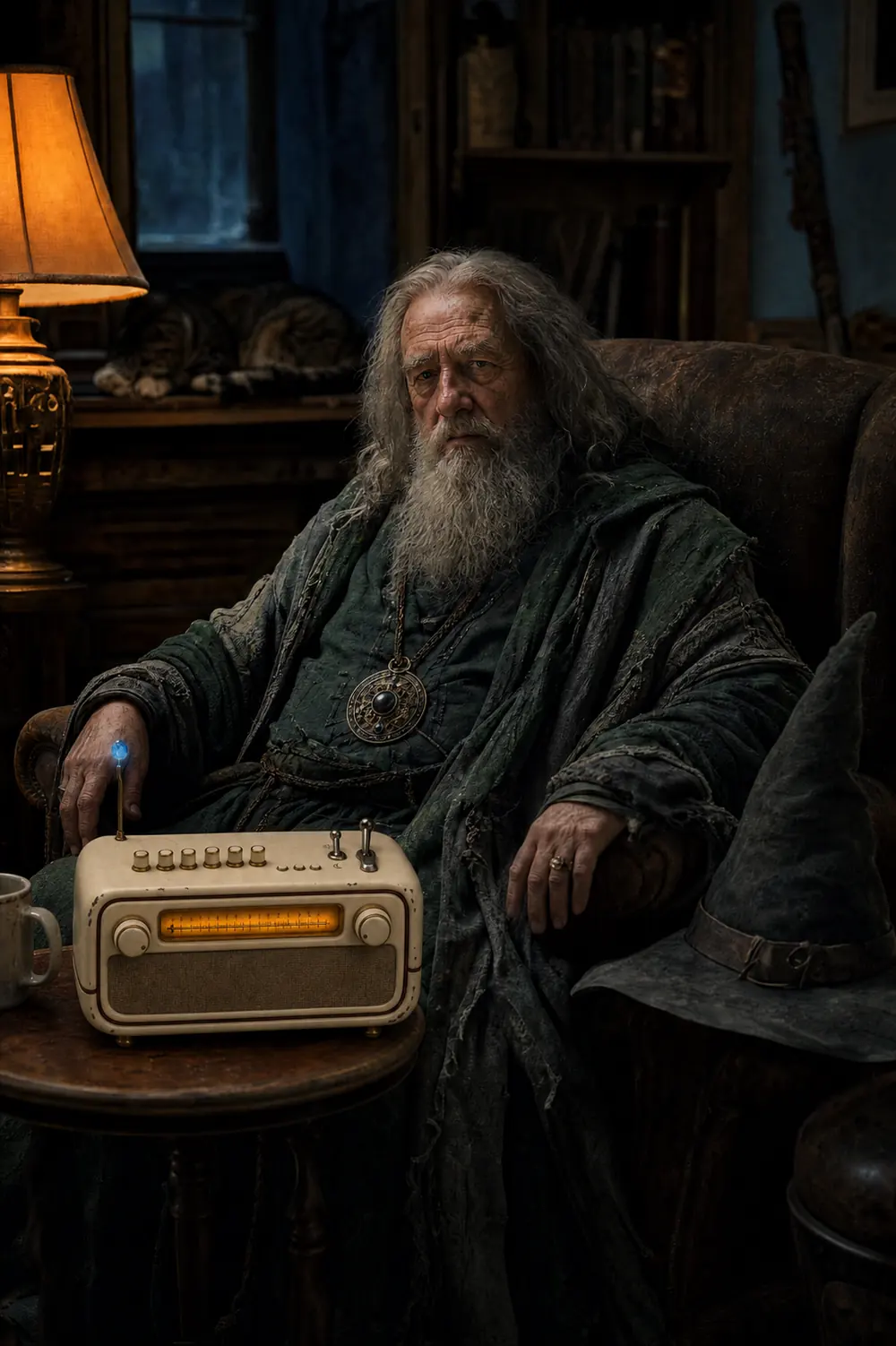
rated 5 out of 5
“i put it on before the kettle. it is on now.”
merric vane
front room · hedge-wizard, fourth circle
-

rated 4.5 out of 5
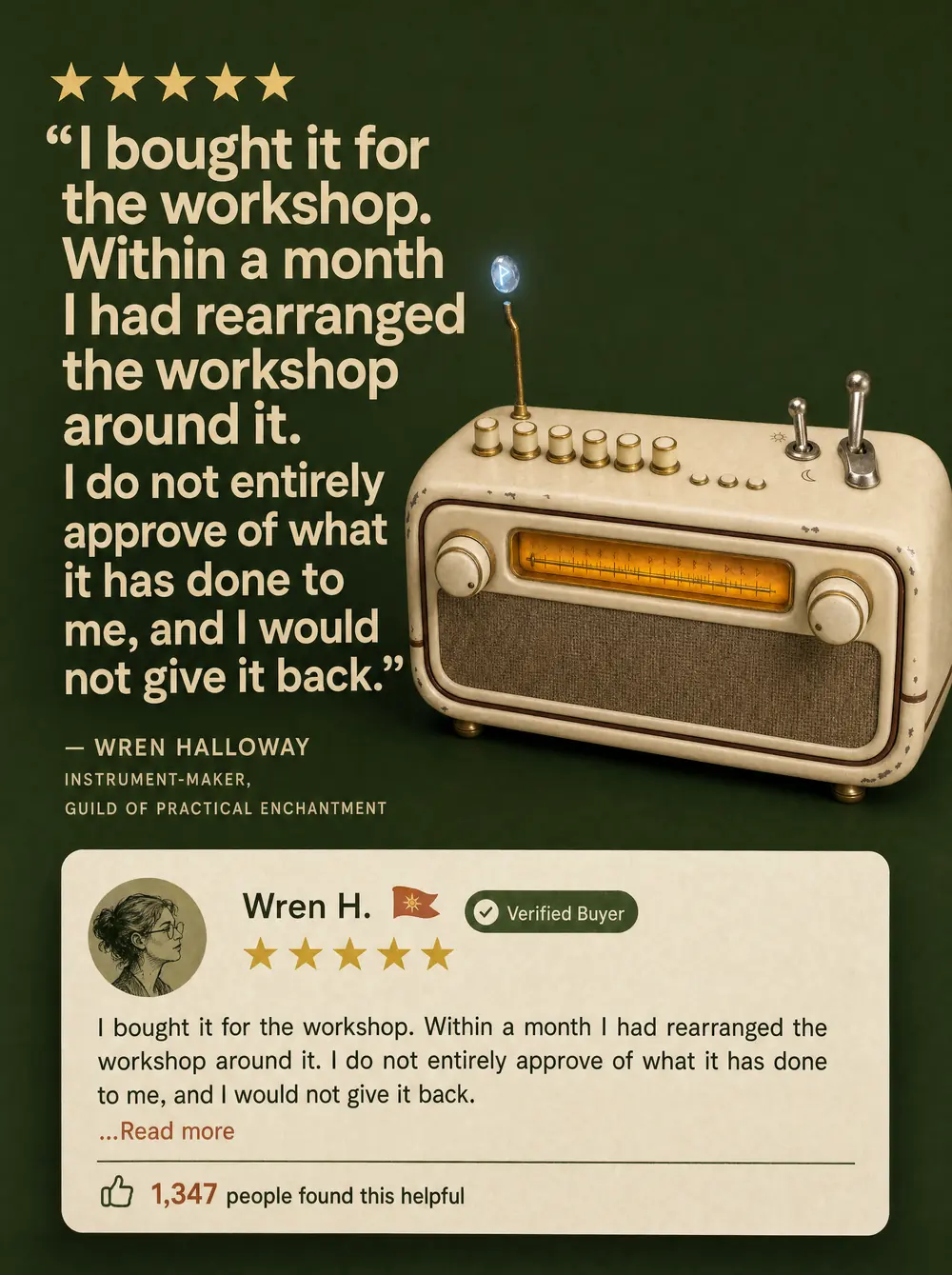
“the switch is stiff for a month, then it loosens. mine is four years on.”
wren halloway
workshop bench · instrument-maker
-
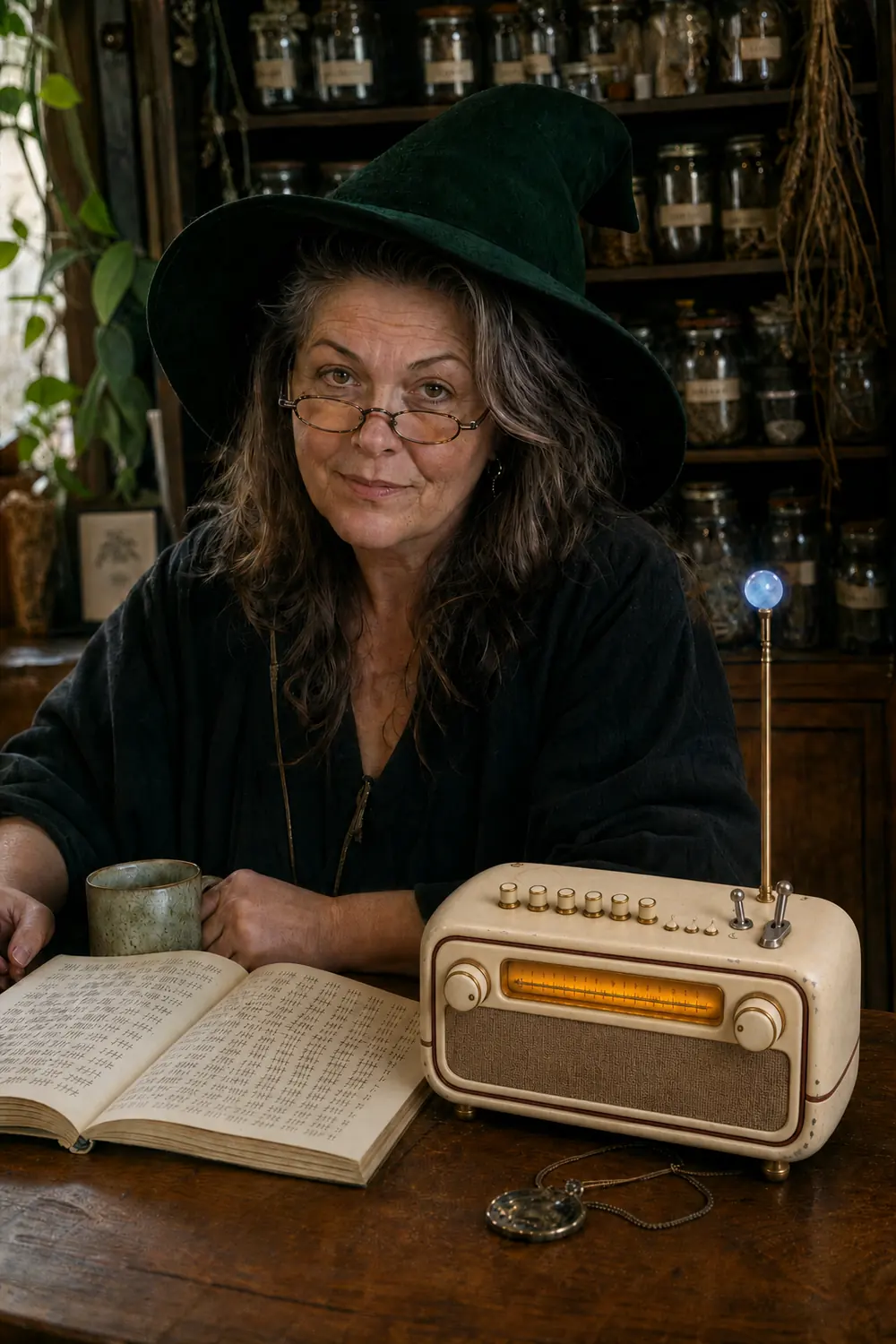
rated 5 out of 5
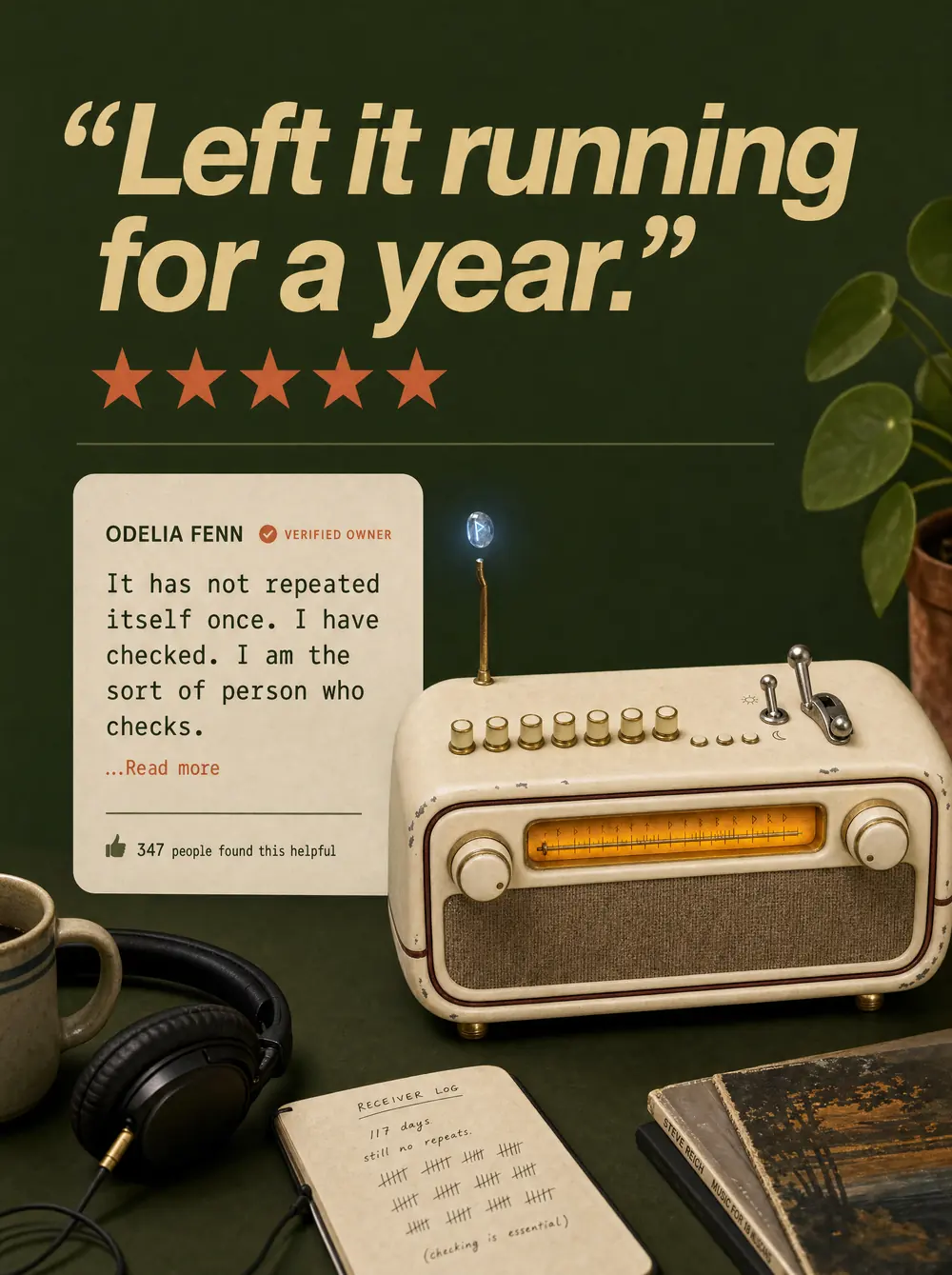
“a year on, it has not repeated itself once. i have checked.”
odelia fenn
kitchen table · one year in
-
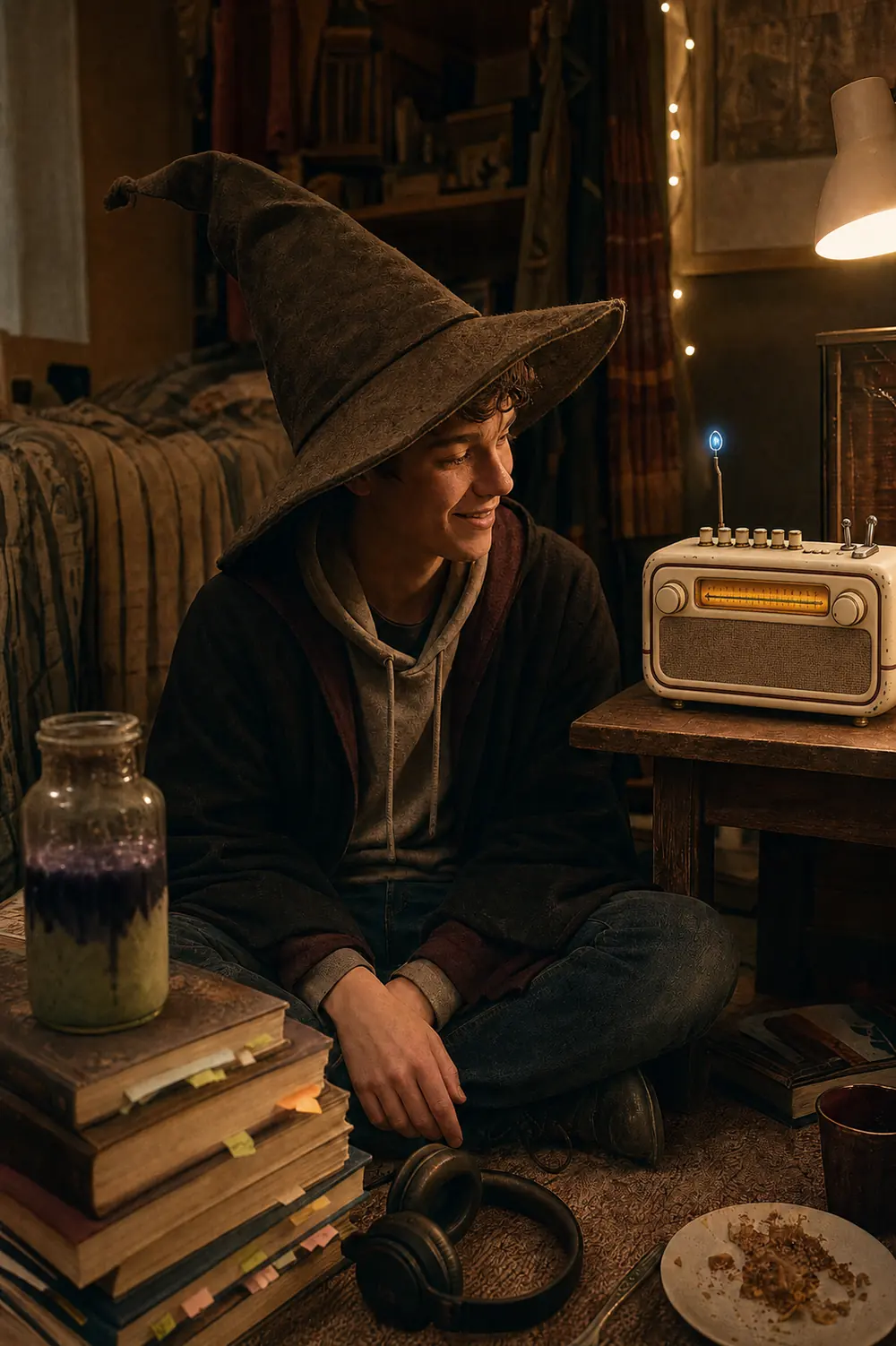
rated 4.5 out of 5
“issued in our third year. they all scuff in the same place, by the left foot.”
aldermoor conservatory
student rooms · standard issue
01 / 05
real posts from our creator network.
-
A man in a pointed felt hat talks straight into the camera at a desk under a sloped ceiling. The box sits in front of him with its tuning window lit amber; part-way through he reaches over and throws the switch, and the window turns blue.
 @thistledown.fm
records rooms for a living
@thistledown.fm
records rooms for a living
“one switch, no menus. i set it on tuesday and left it.”
9:12 pm · 4 march
-
A cardboard carton stamped with a rune is opened on a table: wood-wool packing, a drawstring pouch and a printed card, then the box is lifted out with both hands and held up to the camera, its tuning window already amber.
 @boxes.and.bothers
opens things on camera
@boxes.and.bothers
opens things on camera
“packed in straw, with a note somebody wrote out by hand.”
8:04 am · 19 february
-
A home office lined with records. A man works at a laptop late, notebook open beside him, while the box sits on the desk at his elbow with its tuning window glowing blue.
 @the.long.shift
writes at night, mostly
@the.long.shift
writes at night, mostly
“four days on while i work. it has not repeated itself yet.”
11:38 pm · 27 january
who ran it
sent for review to
4.5 four and a half out of five
“the mana box does not make music. it admits it.”
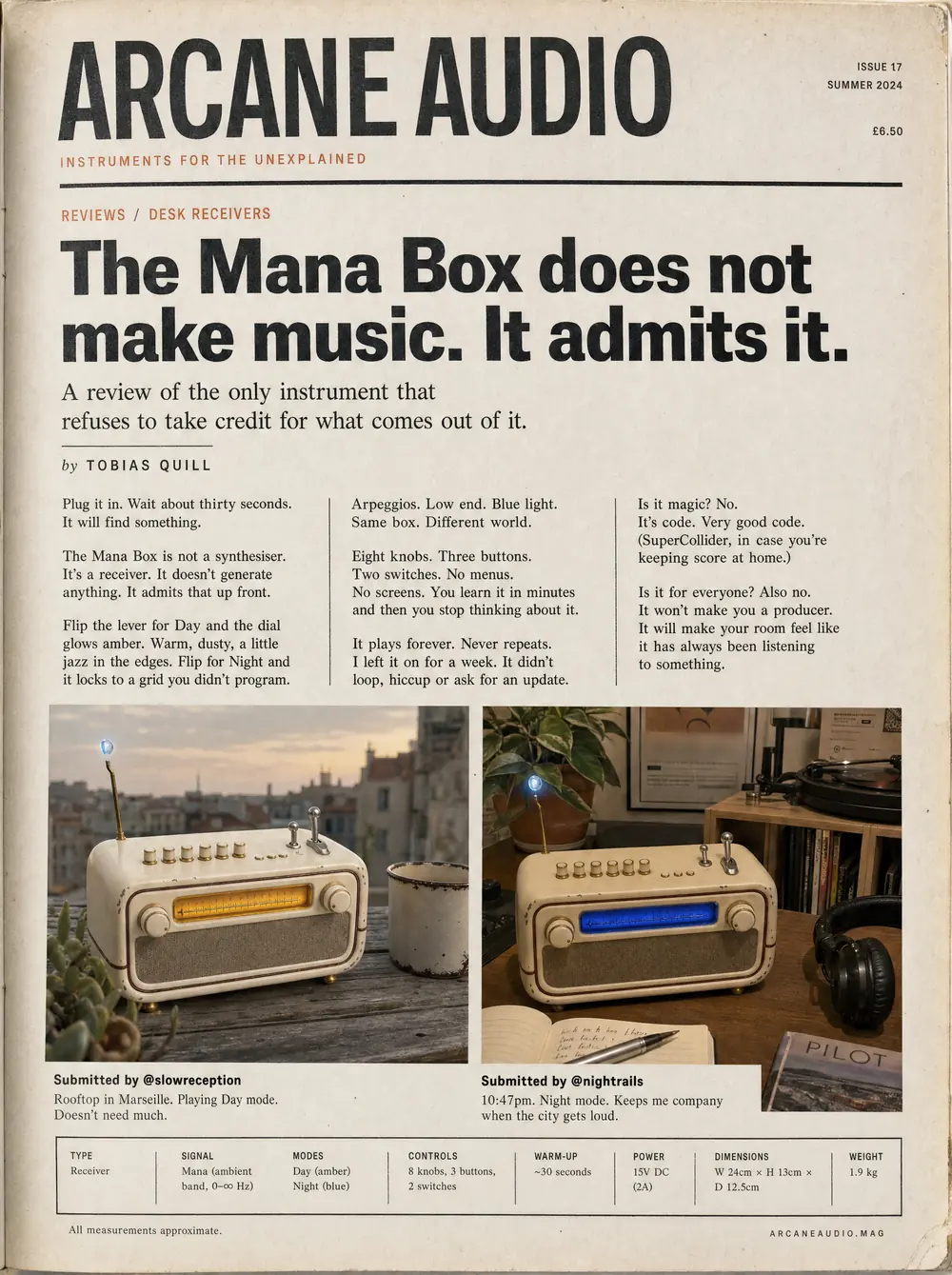
the manual
for a box nobody built.
thirty-nine knobs exist in the software. seven earned a place on the panel. this is what they do.
the seven knobs
- volume
- master level, through the limiter.
- evolve
- how long the pad sits on a chord before it moves. all the way down, about a minute. all the way up, about five seconds. it ships at fifteen or so.
- density
- melody notes per minute, from fourteen down to none. zero is a real setting: the melody stops and the pad carries on without it.
- brightness
- master tone, 200 hz to 12 khz. the weather moves around wherever you leave it, rather than resetting it.
- room
- how much of everything goes into the reverb.
- space
- the length of the reverb tail. a second and a half at one end, fifteen seconds at the other.
- texture
- dust, crackle and tape wobble. this is the knob that makes it sound like a record instead of a computer.
- the eighth knob
- tempo. night only — the day engine has no clock to set.
the four buttons
- next chord
- move the harmony on now, instead of waiting for it.
- event
- ask for a melodic phrase. it answers immediately.
- scene
- jump to a different mood. it takes effect at the next chord change.
- hold
- pins the weather where it is. a latching switch, so its position is the state.
day and night
- day
- no clock. the harmony moves when it decides to.
- night
- a clock, 70 to 132 bpm, and it glides when you move it rather than jumping. the arpeggios lock to the grid.
- the switch
- one parameter. 0 is day, 1 is night. in the software it’s a
single message:
/ambientbox/set mode 1
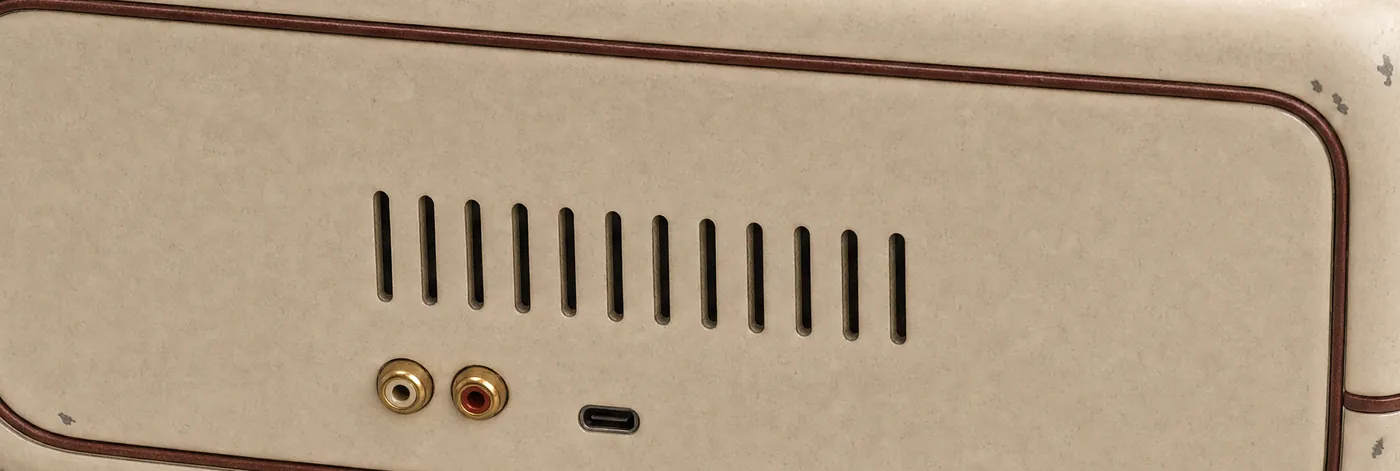
it plays out of the system default — whatever your computer is already using.
about a tenth of one laptop core, measured on an m-series mac.
you cannot buy it. you can download it.
the engine is a supercollider patch, one folder, that starts playing and then doesn’t stop.
download the enginegithub.com/
the engine is a file.
supercollider, one folder, no account. it runs on a laptop, or on a raspberry pi in a shoebox, and it needs none of the woodwork above.
every person, publication and review on this page is invented. the engine is not.
no magic. just supercollider.